

Should I Microchip my Pet?
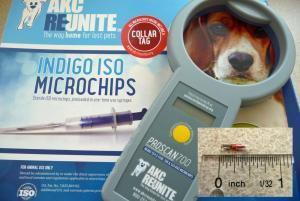
August is Check the Chip Month. Let’s talk all things microchip! First things first, what is a microchip and why should your pet have one?
Microchips are small, glass coated electronic radio transmitters (RFID or Radio Frequency Identification).
- They are about the size of a piece of long-grain rice
- Microchips are safe and pose no health risk
- They are non-reactive in the body
A microchip provides your pet with a permanent form of identification so your pet can be reunited with you in the event he or she becomes lost.
Pros:
- Microchips are easy to implant beneath the skin, and no sedation is needed.
- For dogs in Pennsylvania, a microchip number can also serve as a lifetime dog license. Cats do not require a license in PA, but can still benefit from having a microchip for identification.
A microchip does NOT emit a constant signal and is NOT a tracking device.
It stores a unique number like a bar code in the radio frequency signal that is revealed when a scanner is waved over the chip.
This unique number must be linked to your information in the chip company’s data base. Make sure to update information in the database if you move or your information changes.
At this time, there are many different companies that make microchips. Luckily, all chips are detected by universal scanners. Most veterinarians and animal shelters have scanners available. Newer microchips can also read your pet’s temperature when scanned by your veterinarian!
Are there any risks with implanting a microchip? Thankfully, risks associated with microchips are extremely low.
- There is a slight chance of infection at the implantation site or, even more rare, injury to the spine if implanted improperly. Microchips are implanted under the skin between the shoulder blades. Please have a veterinarian, technician or trained shelter employee implant your pet’s chip to prevent injury.
- Occasionally, the chip may move or “migrate” to another area beneath the skin but this does not harm the pet and should not affect how the chip works.
- On very rare occasions, the radio frequency may fail and the chip cannot be read. If this happens, a second chip can be implanted.
While microchips serve as a permanent form of identification, they should never replace wearing a collar and ID tag on your pet as having visible identification is the quickest way to get your pet back to you.
Even if your pet spends all her time inside the house, it may not be a bad idea to consider a microchip. It only takes one time for your pet to slip out the door and become lost. A microchip is the best chance to be reunited with a lost pet. Patton Veterinary Hospital offers microchipping for both dogs and cats. Have your pet scanned or ask us about implanting a chip at your next visit!
https://www.petfinder.com/dogs/lost-and-found-dogs/how-pet-microchips-work/
Recent Posts
About Us
Patton Veterinary Hospital has been part of the Red Lion community for more than a century. Families have trusted us through new puppies and kittens, senior pet care, unexpected illnesses, and all the everyday moments in between.
That history matters to us, but so does how we show up today. We hold ourselves to high medical standards, invest in thoughtful patient care, and work hard to make each visit feel personal.