The Dangers of Pumpkin Spice
- posted: Sep. 29, 2024
The Dangers of Pumpkin Spice
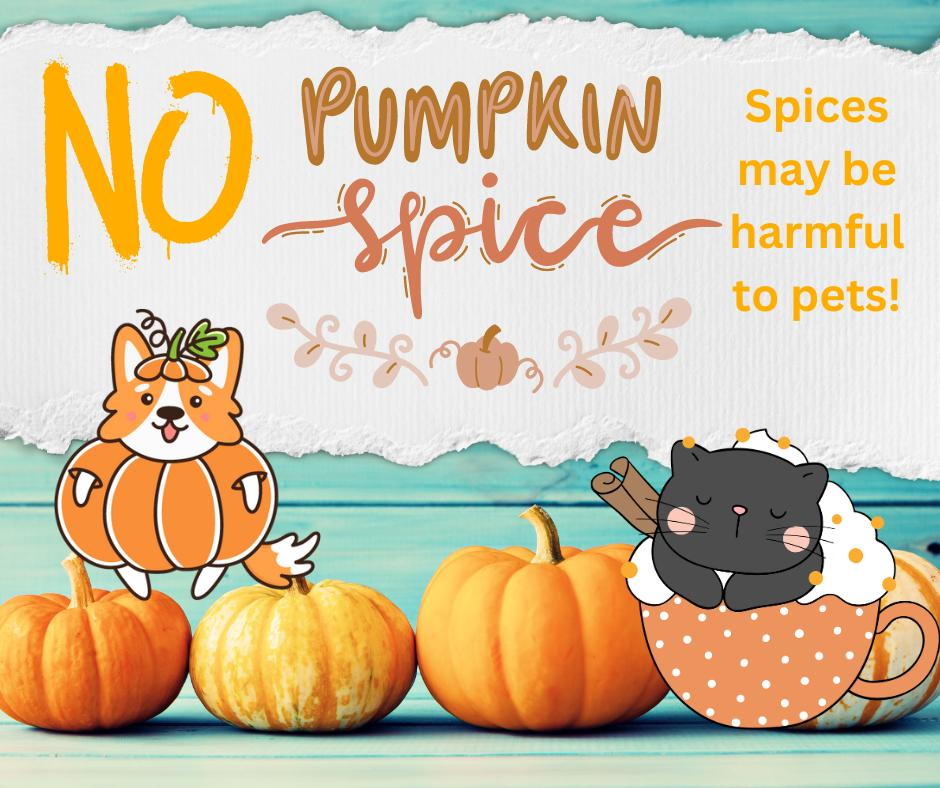
Since the end of summer, pumpkin spice has taken over as the seasonal coffee flavor and is also flavoring just about anything else you can imagine. This title may be a bit misleading as a bite of food containing pumpkin spice is not likely to harm your pet. However, a few of the individual ingredients could cause problems in large amounts. Love it or hate it, it seems to be an inevitable part of fall. So, which ingredients could be problematic for your pet?
First, what’s in it? Pumpkin spice (PS) is typically a combination of cinnamon, nutmeg, ginger, and either cloves or allspice depending on the blend. Items made with PS may or may not contain pumpkin. Pumpkin itself is perfectly safe for pets, and may even aid digestion can be a natural aid for diarrhea or constipation. But, let’s focus on the spices and break down the individual ingredients.
Cinnamon--while not toxic in small amounts, a large spoonful of dry cinnamon powder could cause respiratory issues for your pet and cinnamon oil can be toxic even in small amounts. Cinnamon may cause irritation on the skin our in the mouth. “Large overdoses of the powder or exposure to the essential oil can lead to low blood sugar, liver disease, vomiting, diarrhea and changes in heart rate (1)” especially in cats.
Nutmeg--believe it or not, nutmeg contains a toxic substance called myristicin. At the levels included in most foods, it is not likely to be toxic. However, if your pet ingests a very large amount of powder or, if you happen to have whole nutmeg for grating and your pet eats one of the nuts, it could cause vomiting, abdominal pain, changes to blood pressure and heart rate and even disorientation, seizures or hallucinations (1). A whole nutmeg nut could also potentially get stuck in the intestine of a smaller pet causing an obstruction.
Cloves--again, the issue comes with something like clove oil or ingestion of whole cloves and not so much with the amount of ground cloves used in recipes. Clove oil as well as another common spice in pumpkin pie spice—allspice—contain compounds called eugenols which can cause liver toxicity in cats. Clove oil may also cause vomiting, tremors or seizures and staggering in cats. Cloves appear to be relatively safe for dogs. Interestingly, clove powder or oil can cause numbness and is sometimes used as a natural pain reliever in people for mouth pain, but, don’t try this on your pets!
Ginger—this one is generally fine for dogs and cats, but, as per all ingredients, avoid feeding large amounts and don’t feed pieces of fresh ginger. Ginger can be a natural treatment for nausea, just use it sparingly.
As with any table food, we certainly don’t recommend feeding your pet pumpkin spiced sweets. The sugar, calories and spices are not good for our four-legged friends. And of course, avoid sharing those popular pumpkin spice lattes with your pets! Coffee contains caffeine and other substances that could be harmful. If your pet accidentally eats a bite of some fall-flavored goodie that drops on the floor, don’t panic. Do use caution with essential oils or extracts, especially around cats. Pumpkin spice is here to stay throughout autumn, (at least until peppermint lattes take over)! Please safely enjoy the flavors of fall with your pets and don’t overdo the PSL!
This blog brought to you by the Patton Veterinary Hospital serving Red Lion, York and the surrounding communities.
Location
Patton Veterinary Hospital
425 E Broadway
Red Lion, PA 17356
