Eww! Tapeworms!
- posted: Feb. 01, 2025
Ewww! Tapeworms!
Any intestinal parasite has a built in “yuck” factor, but tapeworms seem particularly icky. How do pets get tapeworms? And how can you prevent and treat these intestinal invaders? Let’s learn more about tapeworms!
A tapeworm is a parasitic flatworm known as a cestode. There are several species of tapeworms, but the two most commonly found in pets are Dipylidium caninum and tapeworms of the species Taenia. There is also a less common species called Echinococcus but infection with this species can cause more serious illness in pets and humans.
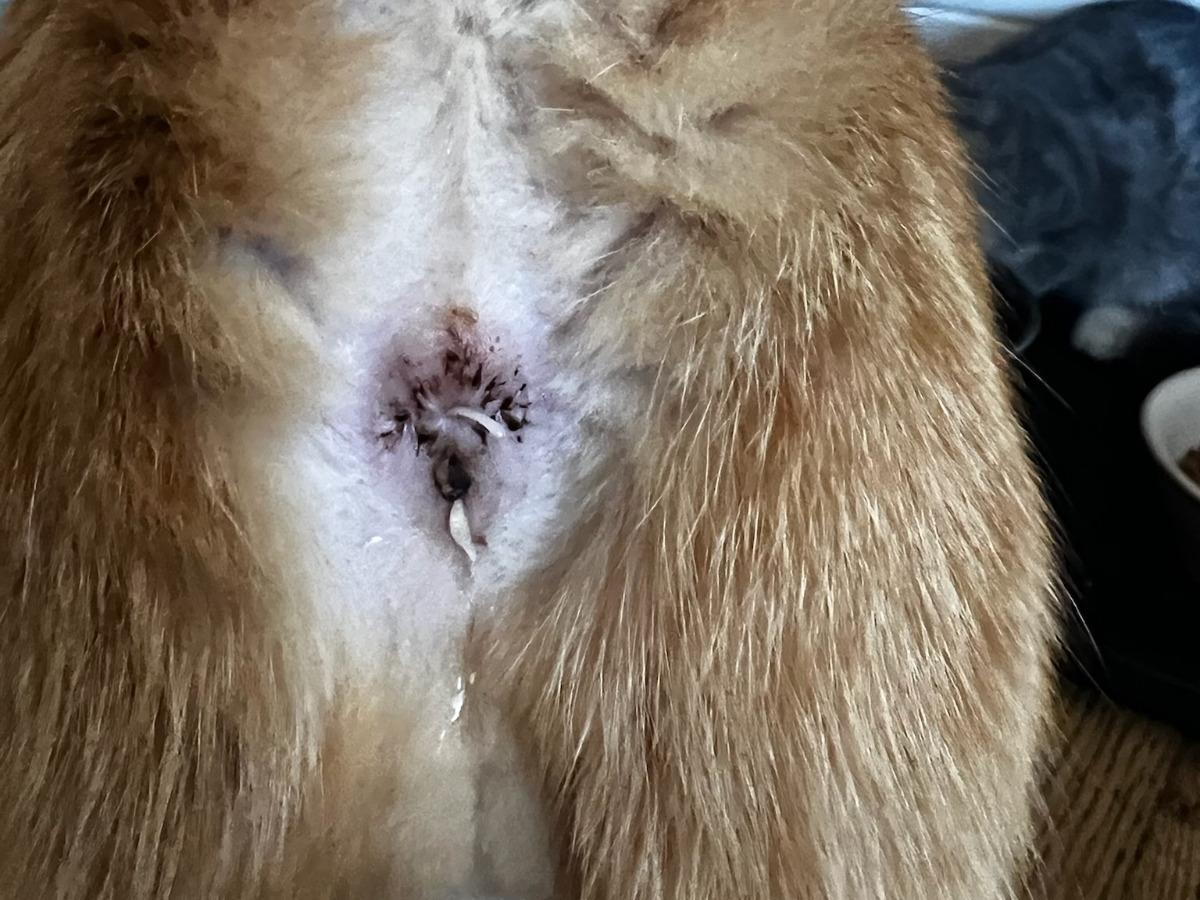
Both Dipylidium and Taenia are fairly primitive organisms which have a head or scolex with hooks and suckers which attaches the worm to the lining of the small intestine where it feeds on blood and nutrients from the host. The rest of the worm consists of segments called proglottids which are shed in the feces of an infected host. These proglottids contain eggs and are the white “rice” or “cucumber seed” segments that can be visible around the underside of the tail or anus, on bedding, or in the stool of infected cats and dogs. These segments can be shed in as little as 2-3 weeks after infection.
The proglottids dry out and release eggs which are then ingested by flea larvae. The tapeworm eggs develop as the flea larvae mature into adult fleas. Dogs and cats are then infected by either swallowing infected fleas when grooming themselves or by ingesting a prey species such as a rodent or rabbit (this is more common with Taenia). The immature tapeworms mature inside the cat or dog, attach to the intestine and start producing proglottid segments with eggs starting the cycle over again. Incidentally, humans are also infected by accidental ingestion of fleas (yuck!) which is why tapeworm infection is more common in young children or immunocompromised adults. Tapeworms do not spread directly through the feces--they need the intermediate flea as a host--so direct pet to pet transmission and pet to human transmission is unlikely.
Tapeworm infection is most commonly identified by finding the segments. Fecal flotation testing may miss tapeworm infections due to the heavy proglottids sinking with debris when the sample is spun in a centrifuge instead of floating and being visible on microscopic exam.
Tapeworms rarely cause symptoms in infected pets; however, rare cases of intestinal impaction have been found with severe infestation and diarrhea or mild anemia could occur. However, tapeworm infections should be treated when discovered. Effective medications can be prescribed by a veterinarian to clear infection. Tapeworm infection can be prevented by using good flea and tick preventatives year-round to prevent flea infestations, by routinely deworming pets--especially cats--who prey on mice and rabbits or keeping cats indoors to reduce predation, and by treating pets who are found to be shedding proglottids.
A word about Echinococcus: This tapeworm is uncommon but can sometimes cause a large cyst to form in the abdomen of an infected dog or person. This species of tapeworm is spread by wild fox and coyotes and can also be found in rodents. Dogs who scavenge may accidentally ingest the egg packets. Adult worms in the intestine cause no disease; however, in some cases migrating larvae can cause large hydatid cysts in the liver of the infected host which can then lead to complications such as internal bleeding and organ failure. Prognosis is poor if a hydatid cyst develops.
Typical tapeworm infections do not cause serious disease but are fairly common in pet dogs and cats and should be treated if segments are found. Control flea infestations and limit access to prey animals like rodents to prevent infection.
This blog brought to you by the Patton Veterinary Hospital serving Red Lion, York and the surrounding communities.
Location
Patton Veterinary Hospital
425 E Broadway
Red Lion, PA 17356
