Lipomas in Dogs and Cats
- posted: Dec. 11, 2025
Lipomas in Dogs and Cats
Dogs, and less commonly, cats sometimes develop benign or non-cancerous tumors composed of fat cells. These tumors are known as “lipomas.” What causes lipomas? Can they be prevented? How are they treated? Let’s learn more!
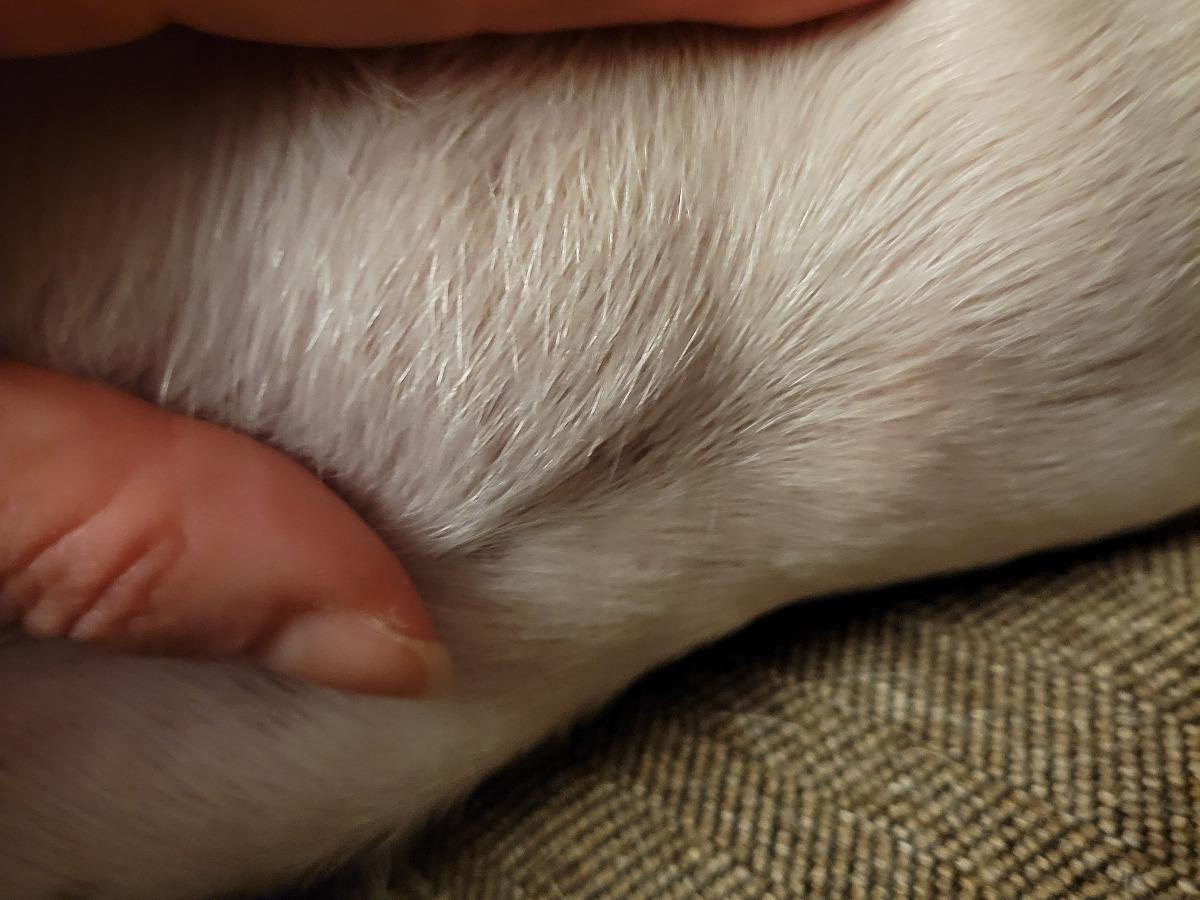
As stated, a lipoma is an abnormal aggregation of fat cells beneath the skin. Lipomas can be small or they can grow quite large. Typically, lipomas are slow growing, soft, round moveable masses that form under the skin, and they can appear anywhere on the body though the chest and belly are some of the most common areas involved. They can also appear in any breed of dog and are also sometimes found on cats; however, Labrador and Golden Retrievers and some other breeds like Dobermans seem to be overly represented as common breeds who develop lipomas.
Diagnosis is typically made by physical examination and a fine needle aspirate of the mass in which the veterinarian collects some cells from the mass by inserting a needle into the mass then examining cells under the microscope. Lipomas are relatively easy to identify as the fat cells of which they are composed are distinct and easy to see under the microscope.
Treatment is not always necessary, but lipomas that are increasing in size, particularly if they are in an area that might impede movement such as in the armpit or groin can be surgically removed which should be curative. In rare cases, lipomas can be infiltrative meaning cells invade a wide area of surrounding tissue, or even more rarely, cancerous (liposarcoma). These versions are more difficult to surgically remove, but surgery is the recommended treatment of choice.
What causes lipomas in the first place? No one factor is responsible for the formation of these fatty tumors and the exact cause is unknown, but they are linked to genetics—certain breeds may have a higher incidence suggesting an underlying hereditary cause; older age, trauma, obesity, being female, and being spayed/neutered are other possible risks. Since the exact cause is unknown and genetics may play a large role in lipoma formation, prevention of lipomas is not possible. However, maintaining a healthy weight, limiting exposure to environmental toxins and chemicals and visiting your vet regularly to keep your pet as healthy as possible may reduce the chance of lipoma formation.
In short, lipomas are common, non-cancerous masses found in both dogs and cats. While we likely can’t prevent lipomas from forming, keeping pets at a healthy weight and having any new lumps checked out by your veterinarian is always a good idea. Lipomas can be surgically removed but there is no medical therapy to prevent or shrink them.
This blog brought to you by the Patton Veterinary Hospital serving Red Lion, York and the surrounding communities.
https://veterinarypartner.vin.com/default.aspx?pid=19239&id=5233990
Location
Patton Veterinary Hospital
425 E Broadway
Red Lion, PA 17356
