Enrichment Ideas for Senior Pets
- posted: Jan. 18, 2026
Enrichment Ideas for Senior Pets
Just like older humans, senior dogs and cats can sometimes experience changes in behavior and memory called cognitive dysfunction which is similar to dementia or Alzheimer’s disease as well as physical changes leading to decreased mobility. However, this doesn’t mean senior pets have to decline. There are things we can do as pet owners to reduce these changes and keep our senior pets healthy and engaged with life.
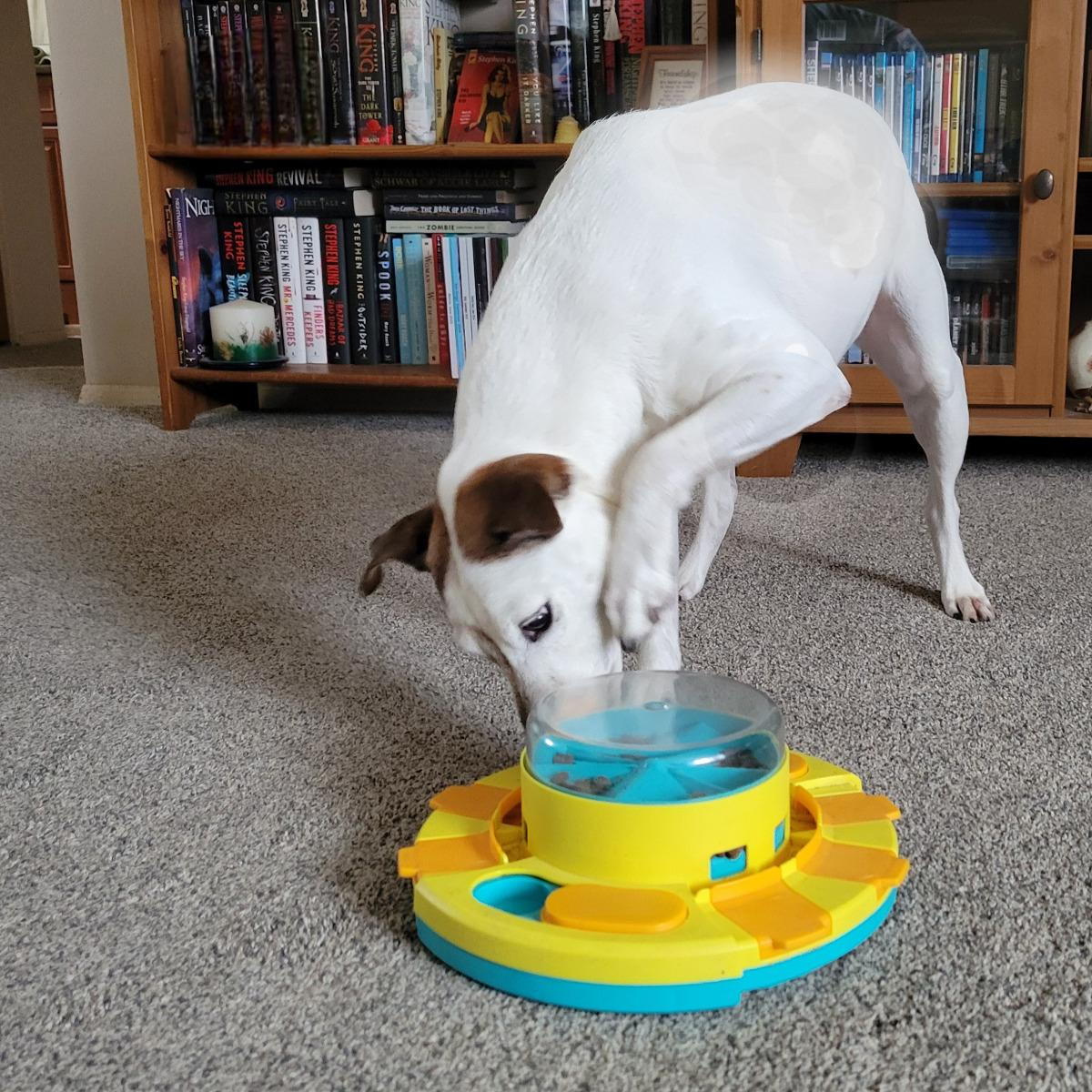
- Keep aging minds sharp with puzzle toys or scent work. Similar to humans doing crossword puzzles or hobbies to keep our minds engaged, dogs and cats can enjoy similar benefits with puzzle toys, snuffle mats or, for cats, scented toys or catnip or silvervine. Both dogs and cats can also use lick mats. You can also hide small treats (choose treats that have a stronger scent such as a jerky treat) around the house for pets to find. Rotating toys periodically also provides a sense of novelty and excitement. If you don’t want to buy a puzzle toy, you can make do-it-yourself foraging toys using plastic bottles or cardboard tubes. Close the ends, cut small holes on the sides large enough to allow food or treats to pass through and fill with your pet’s favorite food then let them push the toy around to randomly dispense treats!
- Gentle training or interactive play keeps both body and mind busy. Dogs can do short training sessions—use clicker training, or, if your pet has poor hearing, hand gestures—to teach a new trick like touching an object or doing a gentle spin. Obviously, keep your pet’s physical fitness in mind when training and keep sessions short—5-10 minutes at most. Cats can learn tricks, too! You can also use a string or wand with a feather toy at the end or an electronic toy mouse to encourage some low impact, gentle play for your feline friend.
- Get out and explore! For most dogs, nothing beats a walk where they can engage their senses, especially sniffing! Again, this activity might hinge on your older pet’s physical abilities, but most dogs can handle a short walk—maybe even just around the front yard or up the street—to experience sights, sounds and scents outside their normal environment. If your pet is unable to walk due to significant decline in mobility, consider a stroller or wagon as a means to allow them to experience a new environment. For cats, having a widow perch or way to see the outside is a great way to let them safely experience the world around them—bonus if there is a bird feeder or other wildlife to enjoy! Kitties like vertical space, but senior cats may need a little help accessing cat trees or windowsills. Provide steps or ramps to make it easier for older pets to climb up and down from high spaces. Cats may also enjoy a walk in a stroller or an enclosed “catio” space in the yard, but make sure your cat is not frightened or stressed if he or she is not used to these types of enclosures or activities. Start slow and acclimate your cat to the new stroller or catio with short sessions and plenty of treats or attention.
- As you can see, while we may need to make some accommodations for our older pets, they can continue to live full, happy lives with these environmental enrichment tools. Getting older doesn’t mean they have to sleep the day away and stop enjoying life. Keep senior cats and dogs as active as their physical condition allows and provide stimulation for their minds to keep them living their best lives well into their golden years!
- This blog brought to you by the Patton Veterinary Hospital serving Red Lion, York and the surrounding communities.
- https://www.lapoflove.com/blog/senior-pet-care/5-easy-ways-to-adjust-your-senior-cat%E2%80%99s-environmental-enrichment
- https://veterinarypartner.vin.com/default.aspx?pid=19239&id=10506122
Location
--mi
Patton Veterinary Hospital
Address
425 E Broadway
Red Lion, PA 17356
Contact Information
(717) 246-3611
